4 min read
The history of houndstooth
From shepherds' cloth in the Scottish borders to the wardrobe of dukes. How a woven check became a byword for quiet elegance.
A pattern from the borderlands
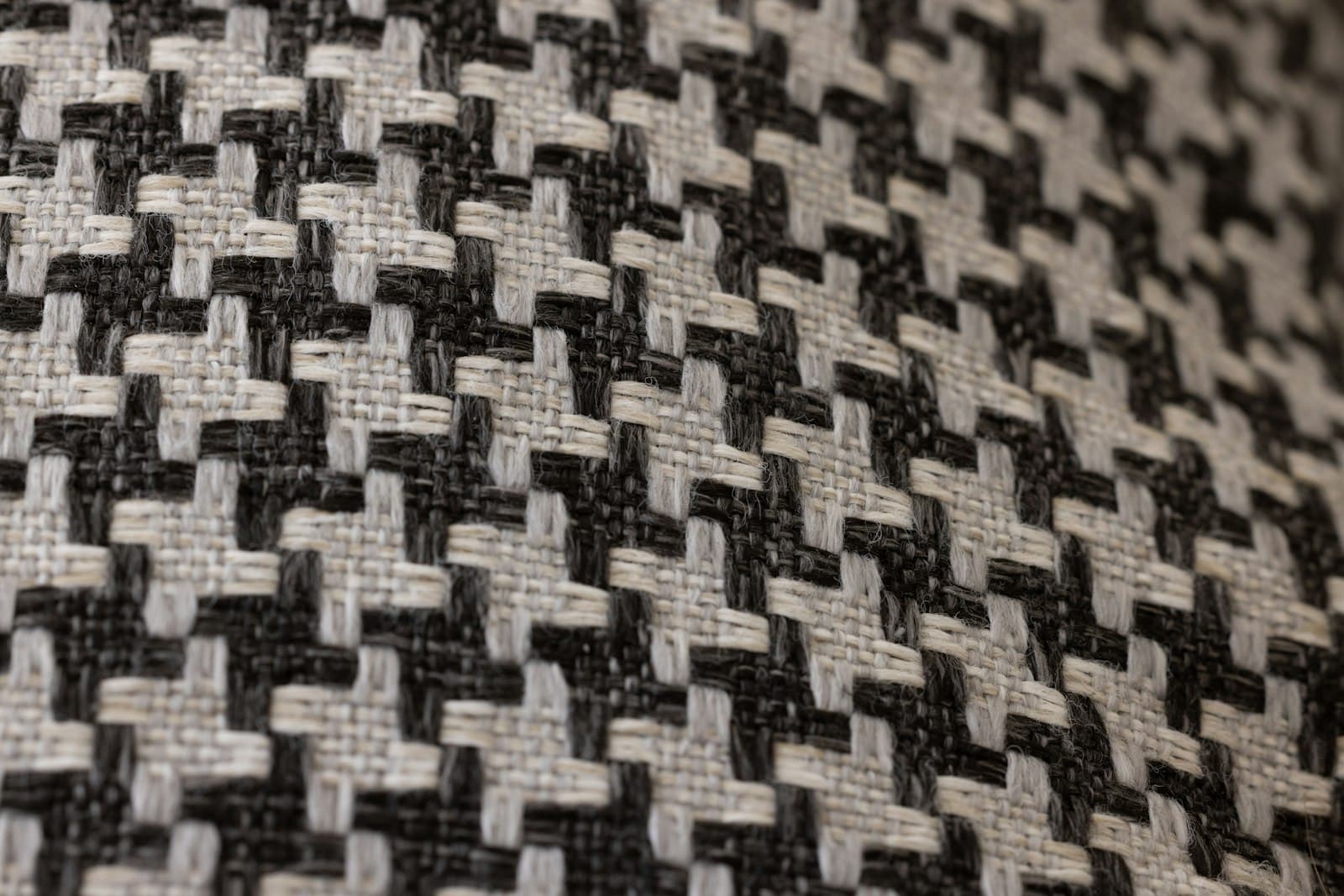
Houndstooth was first woven in wool by shepherds in the Scottish Lowlands long before it had a name. The two-tone pattern comes from a simple twill weave in which coloured and natural yarns are offset so the small broken squares look like a set of pointed teeth.
A tighter, more abstract relative is usually called houndstooth, while the larger version is known as dogtooth.
From field to salon
Through the 19th century Scottish landowners wore the pattern as a hard-wearing country cloth. In the 1930s Edward, Prince of Wales, carried it into the elegant wardrobe, and it became shorthand for a relaxed but assured style.
Since then it has moved between the shooting coat and couture without losing its discretion.
Why it lasts
Houndstooth reads as graphic from across a room and almost solid up close. That makes it a pattern that flatters both a sharp jacket and a soft trouser without taking over.
A restored piece in houndstooth also carries decades of weave and wear, a history a new cloth simply cannot fake.